There’s never been a time in my adult life when I wasn’t a professional writer in some capacity. First a newspaper reporter, then a copywriter, then a marketing writer. I’ve been a ghostwriter. A columnist. A blogger. I’ve contributed stories to countless magazines, writing everything from hole-in-the-wall restaurant reviews and survival-mode parenting articles to technical explainers on edge versus inference in AI applications (don’t feel bad if the last topic lost you completely). I’ve crafted web copy, white papers, customer case studies and more product brochures than I care to recall.
But this year, a new title joined the list, one 25 years in the making: novelist.
I’m still not entirely convinced it belongs next to my name, but to appreciate the journey, you must first step into the way-back machine, circa 2001. I was a corporate marketing manager with two young children, my days filled with carpools, career commitments and chaos ― and a tiny spark flickering in the background of my mind.
An idea for a novel.
I wrote the beginning. And the end. And a dozen or so inconsequential individual sections, none complete or aligned into any meaningful framework. Then my fledgling manuscript was quietly tucked away on a hard drive, where it would sit untouched for nearly 25 years.
In that time, I started my own marketing company. I had a third child. Life marched on.
And I nearly forgot about my little novel idea altogether.
Fast forward to 2024. I was spending entire weekends at my daughter’s dance competitions, where a few minutes on stage were surrounded by hours of waiting. For the first time in years, I had long stretches of uninterrupted downtime. Somewhere between dance numbers, an old dream found its way back. I wish I could remember the exact moment I rediscovered that skeleton of a novel and transitioned it from my hard drive to my desktop. But I don’t. The possibility that I might actually finish it one day was so far removed from my reality that reopening the file didn’t even register as significant.
What I do recall is that I began to settle into corners of theatre lobbies, pecking away on my laptop, as my dance mom friends breezed by. “Working?” they’d ask. I would smile and nod.
For more than a year, I didn’t tell a single person about my novel. I held it close to my heart like a cherished secret. I didn’t want the pressure of being asked how it was going, what it was about, or whether I thought I could actually finish it. I was still trying to answer those questions myself.
And then in 2025, I lost both of my parents within a three-month period. I temporarily eased back from marketing work and instead dug deeper into my novel. Somewhere along the way, it became my refuge, a place where I found unexpected peace. When I went to bed at night, I couldn’t wait for morning to arrive so I could continue writing. I had to keep a notebook and pen on my nightstand because an idea for a snippet of dialogue or a way to rework a scene always seemed to surface just as I was about to drift off to sleep.
The ideas kept coming, usually at the most inconvenient moments: while I was in the hot tub, driving on the freeway, or in the middle of a meaningful conversation. There was no turning them off.
Then 2026 arrived, and my business couldn’t escape the effects of a dismal job market, corporate budget cuts and the proliferation of AI as a marketing “writer.” Within a two-week span, I lost a gig I’d had for years ghostwriting a monthly column, and my largest client significantly reduced my contract. My first instinct was to reach out to other business connections I’d nurtured over the years and immediately try to fill the financial void with new work. But something made me pause: the little spark that for 25 years had refused to be snuffed out.
So I kept writing.
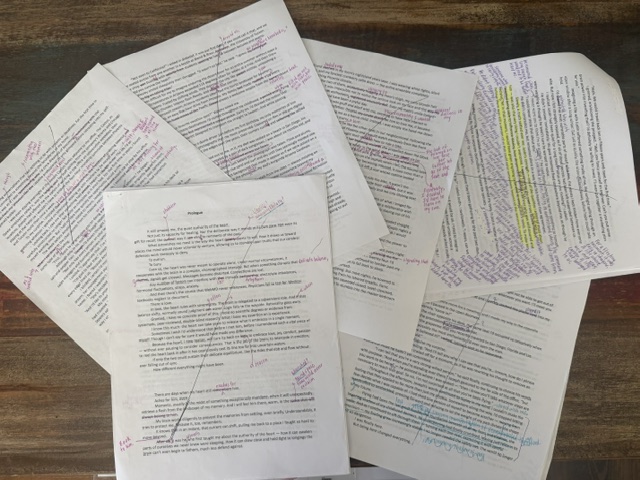
My biggest struggle was the process of weaving together dozens of individual sections of the novel ― some composed more than two decades earlier. Imagine chapters are represented by the alphabet; while I longed to be able to write from A to Z, my approach was nowhere near that linear. I wrote A and Z first. Then I wrote P, D, H, R and V. Then I’d spend days agonizing over whether Q worked better in place of F, or whether G belonged after M. Sometimes I’d feel encouraged that I might actually be approaching the finish line. And then I’d spend an entire week trying to perfect a single paragraph so it flowed the way I wanted it to.
When I’d finally complete a chapter, an overwhelming swell of pride would wash over me. Immediately followed by waves of doubt. Who was I to think that I could write fiction? Would anyone care about my characters the way I did? Would they feel the narrator’s anguish? Her growth? Would anyone be inclined to turn the page?
Then on May 5, 2026, I wrote the final word of my first draft. I sat before my computer and cried. Ugly cried, if I’m being honest. The story I’d carried for twenty-five years had finally found its way out of me.
Nothing I’ve ever written has made me prouder than my novel. Every word deliberately chosen. Each sentence scrutinized. Every transition carefully crafted.
Still, a sense of trepidation had settled over me as I’d approached those last words. What would it feel like for this manuscript to actually be … complete? To say goodbye to something that had quietly become such a defining part of my daily routine ― of my identity?
I needn’t have worried.
Before the tears had even dried, I was back at it. Revising. Rewriting. Editing.
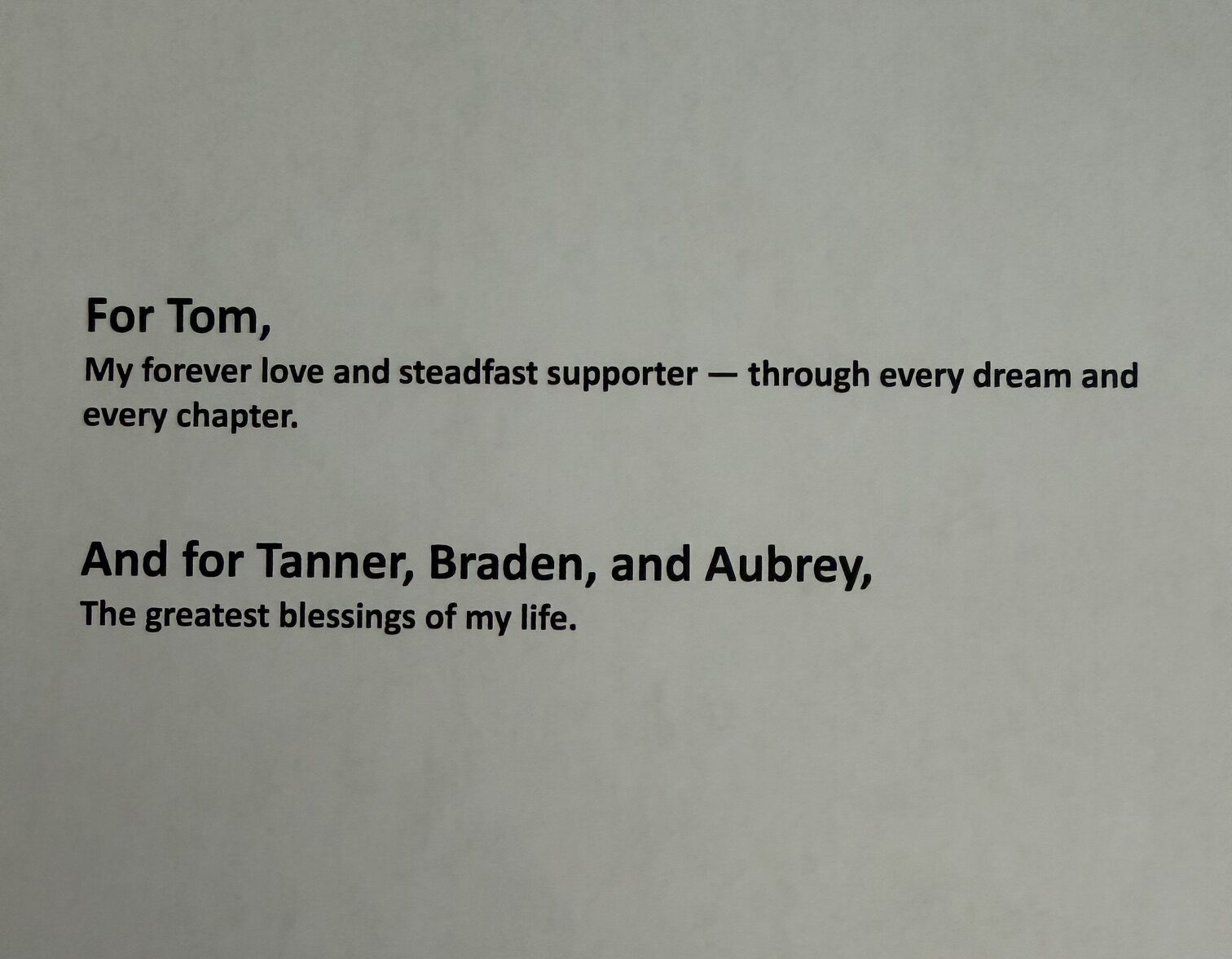
I selected a couple of close friends to read the first draft. I wrote a back cover synopsis. I researched the merits of self-publishing versus traditional. Then I re-edited the entire novel, wrestling with whether words I’d painstakingly breathed life into were really pulling their weight. I edited it a third time ― axing nearly 5,000 of them. I designed a cover. I decided the Prologue and Epilogue needed to be completely revamped.
And I marveled at how transitory that “finish line” actually was.

But then came the even more challenging part: preparing to query agents. I had to distill my entire 227-page work into a compelling three-sentence blurb, develop an interesting hook, and find existing comparable titles that would help agents understand where my novel would sit on bookstore shelves. The process also entails rejection ― loads of it. One writer friend told me she has already received 68 “no thank yous” and is prepared to accept at least 100 more.
Oh, and that third draft I mentioned? Just another ‘finish line’ that led straight into another round of editing.
Back in 2001, had anyone asked me about the premise of my novel, I would have described it as a love story. Twenty-five years later, it transformed into something much deeper. It’s about fear and healing. Memory and longing. Loss and resilience. It’s about one woman’s deeply personal journey back to the parts of herself she thought she’d lost.
But now I find myself at an impasse that no amount of editing can resolve. What remains isn’t another revision — it’s vulnerability. I have to let other people read it.
That prospect has triggered some rather jarring pendulum swings of emotion. One moment, I’m hopeful that it might be good enough to sneak into the exclusive club of novelists who land traditional publishing deals ― an estimated 1–2% of aspiring authors. The next, I convince myself that the story I’ve carried with me for two decades is nothing more than an imposter. Just 227 pages of wishful thinking.
For years, it belonged only to me. The thought of even publishing this blog ― of finally letting everyone in on a secret I’ve kept for so long ― leaves me feeling utterly exposed.
Maybe that’s what happens when you live with a story long enough. It becomes a part of you.
For a quarter of a century, my novel quietly waited. When I invited it back into my life, it refused to let me go.
Where we go from here remains to be seen. But no matter what happens next, I think I’m finally ready to let this sit beside my name: novelist.